Variac voltage regulators provide a practical way to adjust alternating current (AC) voltage for different electrical applications. They allow users to increase or decrease output voltage smoothly without changing the incoming power supply. Unlike fixed-output transformers, a Variac uses a movable contact to select different points along a winding. This design makes it useful for electrical testing, laboratory experiments, equipment development, and industrial troubleshooting. Understanding how these devices work helps engineers choose suitable voltage control equipment. It also helps technicians operate electrical systems more safely, accurately, and efficiently across different operating conditions.
What Is a Variac Voltage Regulator?
A Variac is a variable autotransformer that adjusts AC output voltage through a movable electrical contact. Variac voltage regulators are commonly used in laboratories, industrial environments, and testing applications that require precise manual voltage adjustment. The term originally became associated with variable autotransformers manufactured under the Variac name. Today, people often use it to describe similar variac transformer designs. These devices typically contain a magnetic core, a copper winding, and a rotating brush. Turning the control knob moves the brush along the exposed winding surface. This changes the effective number of winding turns supplying the output. Consequently, the output voltage can increase or decrease within the transformer’s specified operating range.
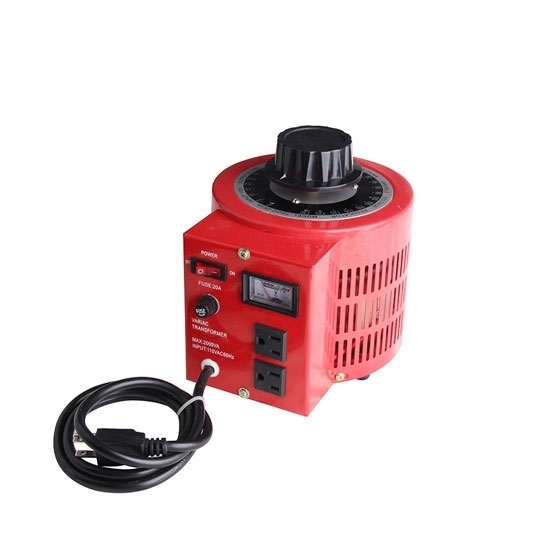
How Variac Voltage Regulators Control AC Voltage
The operating principle depends on electromagnetic induction, which transfers electrical energy through a changing magnetic field. When alternating current flows through the transformer’s winding, it creates an alternating magnetic flux within the core. This flux induces voltage across the winding according to the number of turns involved. The movable brush selects a particular point along the winding, changing the voltage available at the output terminals. By rotating the control knob, an operator can gradually adjust the voltage supplied to connected equipment. The precise output depends on the input voltage, winding design, brush position, and electrical load.
Main Components and Their Functions
- Magnetic core: Provides a low-reluctance path for magnetic flux and supports efficient electromagnetic coupling between winding sections.
- Copper winding: Carries alternating current and provides the turns needed to produce the required voltage.
- Movable brush: Establishes electrical contact with the winding at a selected position, determining the available output voltage.
- Control shaft: Moves the brush smoothly, allowing the operator to adjust voltage manually.
- Input and output terminals: Connect the device to the AC supply and the equipment receiving adjustable power.
- Protective housing: Covers energized components and helps reduce accidental contact during normal operation.
The quality of these components influences voltage stability, current capacity, operating life, and adjustment accuracy. A well-maintained brush makes consistent contact with the winding, reducing unwanted resistance and localized heating. Damaged contacts or contaminated winding surfaces can cause unstable output and accelerated wear. For this reason, inspection and maintenance are important when a Variac operates frequently or supplies substantial electrical loads.
How Input Voltage Becomes Adjustable Output Voltage
A traditional Variac uses an autotransformer arrangement, meaning part of the winding serves both input and output circuits. The incoming AC supply energizes the winding and establishes magnetic flux in the core. The brush then selects a point corresponding to a particular number of effective turns. Moving the brush changes the voltage between the selected point and the output reference terminal. Depending on the design, the device may provide output voltage below, near, or above the input voltage. Operators must always follow the model’s rated adjustment range and terminal configuration.
How to Adjust Variac Output Voltage Safely
For example, a properly rated 120-volt input model might provide an adjustable output from approximately zero to 140 volts. The actual range varies by manufacturer and model, so users should verify the nameplate specifications. Raising the brush position generally increases output voltage, while lowering it decreases voltage. However, output voltage does not directly determine how much current a connected device can safely draw. The Variac’s current rating, thermal limits, and connected load remain critical considerations. Users should also monitor output voltage with an appropriate meter when precise adjustment is necessary.
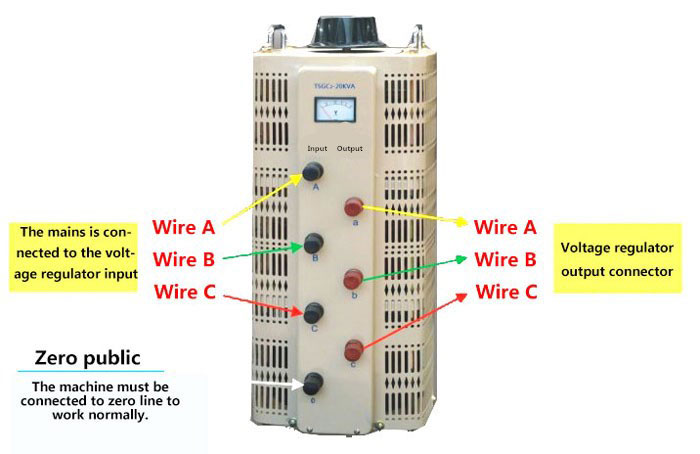
Common Applications of Variable AC Voltage Control
Variable AC voltage control is valuable whenever equipment must operate at different supply levels. Engineers and technicians use adjustable transformers to test electrical products before approving them for production. They can gradually increase voltage to observe startup behavior, operating current, and performance changes. Research laboratories also use these devices for controlled experiments involving AC-powered equipment. Industrial maintenance teams may use them to investigate electrical faults under carefully managed conditions. Nevertheless, the device must be correctly rated, and testing procedures should account for the equipment’s voltage, current, and insulation requirements.
Laboratory and Research Testing
- Electronic equipment testing: Engineers adjust supply voltage to evaluate how prototypes respond to changing electrical conditions.
- Component evaluation: Technicians examine the performance of transformers, lamps, heaters, and other AC-powered components.
- Experimental research: Researchers use adjustable voltage to investigate electrical behavior under repeatable laboratory conditions.
- Troubleshooting: Maintenance professionals can introduce controlled voltage changes while diagnosing certain electrical equipment problems.
Laboratory applications benefit from gradual adjustment because sudden voltage changes may affect test results or damage sensitive components. However, a Variac should not replace specialized test equipment when accurate regulation, isolation, or automated control is required. Researchers should use suitable measurement instruments to record actual voltage and current throughout each experiment. They should also document test conditions to support reliable comparisons between repeated measurements.
Industrial and Manufacturing Applications
- Production testing: Manufacturers check electrical products at selected voltage levels before final inspection.
- Motor evaluation: Technicians examine certain motor startup and operating characteristics, subject to motor design and testing requirements.
- Transformer testing: Engineers investigate transformer behavior using appropriate procedures and compatible test arrangements.
- Equipment servicing: Repair technicians use adjustable AC power during controlled diagnostic procedures when manufacturer instructions permit it.
Industrial use requires particular attention to continuous current ratings, ventilation, duty cycle, and enclosure protection. A unit that works well for brief laboratory experiments may not suit continuous production testing. Dust, vibration, heat, and frequent adjustment can also affect brush performance and equipment life. Selecting an industrial model with suitable ratings helps reduce overheating risks and unexpected downtime.
Types of Variac Voltage Regulators Available
Different variable autotransformer designs serve different electrical requirements. Choosing the right type depends on supply voltage, current demand, adjustment range, portability, and control preferences. Some models use a simple hand-operated knob, while others incorporate motorized positioning or digital monitoring. Manufacturers also offer single-phase and three-phase configurations for different applications. Although these designs share the basic principle of adjustable transformer voltage, their electrical capabilities and installation requirements can differ significantly.
Common Design Options
- Manual variable autotransformers: Use a hand-operated control knob for direct, gradual voltage adjustment.
- Motorized variable autotransformers: Use an electric drive to move the brush, supporting remote or automated adjustment.
- Single-phase models: Supply adjustable single-phase AC for laboratories, workshops, and compatible equipment.
- Three-phase models: Support suitable three-phase applications, including industrial testing and electrical system evaluation.
- Enclosed bench models: Provide a compact format for laboratories, service benches, and educational facilities.
- Panel-mounted units: Integrate into compatible electrical panels or test systems when installation requirements are satisfied.
The best configuration depends on the intended workload rather than the device’s physical size alone. Buyers should compare voltage range, rated current, thermal performance, adjustment mechanism, and required safety features. Three-phase applications also require careful attention to phase configuration and load balance. Consulting the manufacturer’s technical documentation helps ensure compatibility with the intended electrical system.
Benefits and Limitations of Using a Variac
A traditional variac voltage regulator offers several advantages for controlled AC voltage adjustment. Its mechanical design supports continuous adjustment without the discrete steps found in some voltage-control systems. It can also produce a relatively smooth output waveform because it does not normally rely on high-frequency switching. This makes it useful for many conventional electrical testing tasks. However, its performance depends on the input supply and connected load. A manual unit also requires operator supervision, making it less suitable for applications that demand automatic correction or unattended voltage control.
Key Advantages
- Smooth adjustment: Operators can change output voltage gradually within the available operating range.
- Simple operation: Manual models usually have straightforward controls and easy-to-understand operating principles.
- Low waveform distortion: Traditional transformer-based designs generally avoid the switching-related distortion associated with some electronic controllers.
- Flexible testing: Users can evaluate compatible equipment under different voltage conditions.
- Durable construction: Properly maintained units can provide long service in suitable operating environments.
Important Limitations
- No inherent isolation: Standard autotransformer designs do not electrically isolate the output from the input supply.
- Limited current capacity: Each unit has a defined current rating that must not be exceeded.
- Manual supervision: Basic models cannot independently correct output voltage when supply or load conditions change.
- Contact wear: The movable brush and winding surface require inspection and maintenance.
- Overheating risk: Excessive current, poor ventilation, or damaged contacts can cause dangerous temperature increases.
These limitations make correct application and careful operation essential. Users should not assume that a variac voltage regulator provides the same protection as an isolation transformer, circuit breaker, or automatic voltage regulator. Additional protective devices may be necessary, depending on the test arrangement. A qualified electrical professional should assess the complete setup when exposed conductors, hazardous voltages, or high-current loads are involved.
How to Select the Right Variac for Your Application
Selecting a suitable unit starts with identifying the electrical requirements of the connected equipment. Check the available input supply, required output range, maximum continuous current, and expected operating duration. Consider whether the application needs single-phase or three-phase power. Determine whether manual adjustment is sufficient or remote control is necessary. Environmental conditions also matter, especially when the device will operate in industrial settings with elevated temperatures or airborne contaminants. Comparing these factors before purchasing a variac voltage regulator helps prevent undersizing, compatibility problems, and unnecessary operating costs.
Essential Selection Factors
- Input and output voltage: Confirm that the available supply and required output fall within the manufacturer’s specifications.
- Current rating: Choose a model rated for the maximum expected continuous load current.
- Power rating: Check the specified volt-ampere capacity and any restrictions affecting the intended load.
- Adjustment range: Ensure the unit can reach the minimum and maximum voltages needed for testing.
- Control method: Select manual or motorized operation according to the required adjustment speed and automation.
- Safety provisions: Evaluate fusing, overcurrent protection, enclosure design, and compatibility with external isolation equipment.
A practical selection process should also consider startup current and the characteristics of the connected load. Motors, transformers, and capacitive equipment may draw substantial inrush current during energization. This can exceed normal running current and stress an undersized variable transformer. Review the manufacturer’s guidance before testing such loads. When precision matters, use a properly rated voltmeter and ammeter rather than relying solely on the control dial.
Safe Operating Practices and Maintenance
Safe operation begins with understanding that adjustable voltage does not automatically mean protected voltage. A standard variac voltage regulator can expose users to hazardous electrical potentials, and its output may remain dangerous even at low dial settings. Before connecting equipment, inspect the housing, terminals, power cord, and visible winding surfaces. Confirm that the load is compatible with the unit’s electrical ratings. Keep the equipment dry, provide adequate ventilation, and use suitable overcurrent protection. Never assume the control knob disconnects the incoming supply or makes the terminals safe to touch.
Recommended Safety Measures
- Verify the ratings: Check the nameplate and manual before connecting a load or changing voltage.
- Use suitable protection: Provide correctly selected fuses or circuit breakers and appropriate grounding for exposed conductive parts.
- Monitor electrical conditions: Measure output voltage and current using instruments rated for the application.
- Avoid overloads: Never exceed the specified continuous current or permitted operating temperature.
- Inspect contacts: Arrange qualified maintenance if the brush sparks excessively, moves unevenly, or produces unstable output.
- Disconnect before servicing: Isolate the supply and verify that hazardous energy is absent before inspection or repair.
Routine maintenance should follow the manufacturer’s instructions and the operating environment. Dust accumulation, worn brushes, loose terminals, and poor ventilation can reduce reliability. Any signs of burning, unusual noise, excessive heat, or damaged insulation require immediate attention. Stop using the unit until a qualified person has assessed the problem. For work involving potentially lethal voltage, appropriate training, electrical protective equipment, and established workplace safety procedures are essential.
Where Variac Voltage Regulators Fit in Modern Electrical Systems
Modern electrical systems use several methods to control voltage, including automatic voltage regulators, electronic AC controllers, and programmable power supplies. Variac voltage regulators are useful when operators need direct, continuous adjustment of AC voltage for testing or research. A traditional Variac is especially practical for applications where a clean, adjustable AC waveform is more important than automatic correction. However, it may not suit installations requiring constant output despite supply fluctuations. Understanding the difference between adjustable transformers and automatic regulation helps users select equipment that matches the actual task.
A programmable AC source may be preferable when tests require precise settings, automated sequences, data logging, or controlled frequency changes. An isolation transformer may be necessary when electrical separation is required, although the complete safety arrangement must still be evaluated. An automatic voltage regulator is more appropriate when the goal is to maintain a target voltage as input conditions vary. Each industrial automation solution serves a different purpose. Comparing these functions before purchasing helps engineers create safer, more reliable, and more efficient test systems.
Frequently Asked Questions
1. What does a Variac voltage regulator do?
A variac voltage regulator adjusts AC output voltage by moving a contact along a transformer winding. This allows users to raise or lower voltage gradually for compatible electrical testing, laboratory experiments, and equipment servicing. Its actual output range depends on the model’s design and input supply. A standard Variac does not automatically stabilize voltage or provide electrical isolation.
2. How does a Variac change AC voltage?
A variac transformer changes output voltage by selecting different numbers of effective winding turns. Alternating current produces magnetic flux in the transformer core, inducing voltage along the winding. Moving the brush changes the selected output point and therefore changes the voltage supplied to the connected load.
3. Why is a Variac used for electrical testing?
A variac voltage regulator allows technicians and engineers to apply adjustable AC voltage during controlled tests. They can observe how compatible electrical equipment responds to different supply levels. This is useful for troubleshooting, product development, laboratory research, and certain manufacturing inspections. Correct current ratings and appropriate electrical protection remain essential.
4. Where are Variac voltage regulators commonly used?
They are commonly used in electrical laboratories, research facilities, manufacturing plants, repair workshops, and educational institutions. Typical applications include component evaluation, product testing, and controlled troubleshooting. The required voltage range, current capacity, and safety features determine which model is suitable for each environment.
5. How do you choose the correct Variac for your equipment?
Start by checking the required input voltage, output range, load current, and power rating. Then consider single-phase or three-phase operation, adjustment method, and expected operating duration. Account for startup current when testing motors or transformers. Always verify the manufacturer’s specifications and use suitable electrical protection before operating the unit.